
Best Homeopathy for Eczema Symptoms & Skin Problems in Hyderabad

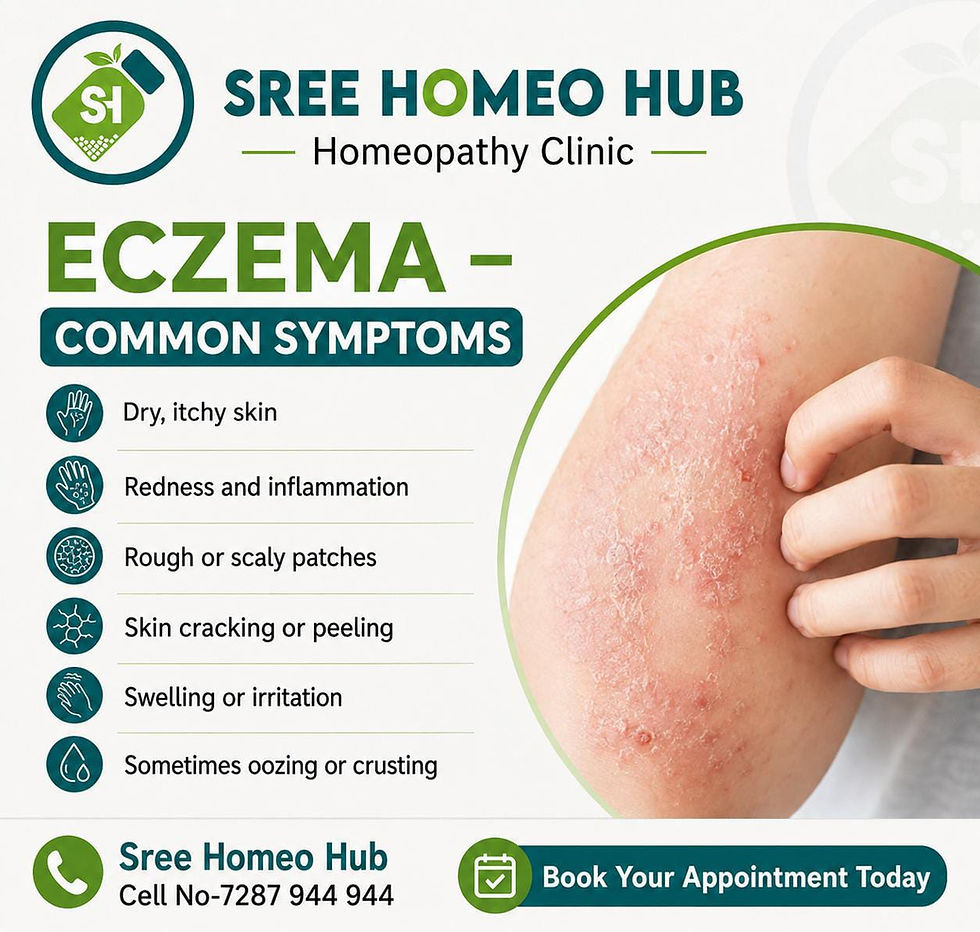
Eczema is a common skin condition that can cause dryness, itching, redness, irritation, and inflammation. It may occur at any age and can affect different parts of the body, including the face, hands, arms, legs, neck, and skin folds.
For people experiencing repeated eczema flare-ups, identifying possible triggers and following an appropriate skin-care routine can be helpful. At Sree Homeo Hub, patients can consult experienced homeopathy doctors in Hyderabad for individualized care and guidance.
What Is Eczema?
Eczema is a group of inflammatory skin conditions that can make the skin dry, sensitive, itchy, and irritated. Atopic dermatitis is the most common type of eczema.
Eczema symptoms may come and go. Some people experience occasional flare-ups, while others may have symptoms for a longer period. Scratching itchy skin can damage the skin barrier and may increase the risk of infection.
Eczema is not contagious, so it cannot be spread from one person to another through normal contact.
Common Symptoms of Eczema
The symptoms of eczema can vary from person to person. Common symptoms include:
1. Severe Itching
Itching is one of the most common symptoms of eczema. It may become worse at night and can lead to frequent scratching.
2. Dry Skin
Affected areas may become unusually dry, rough, flaky, or sensitive. Dryness can make itching and irritation worse.
3. Red or Inflamed Skin
The skin may appear red, inflamed, or irritated, particularly during a flare-up.
4. Skin Rash
Eczema can cause patches or rashes on different parts of the body. The appearance of the rash may vary depending on skin tone and the type of eczema.
5. Cracked Skin
Very dry eczema-affected skin may develop cracks. These cracks can sometimes become painful or bleed.
6. Thickened Skin
Repeated scratching or rubbing over a long period can make the skin thicker and rougher.
7. Small Bumps or Blisters
Some forms of eczema can cause small raised bumps or fluid-filled blisters, particularly on the hands and feet.
8. Burning or Stinging
Some people experience burning, stinging, or increased sensitivity in affected areas.
Where Does Eczema Commonly Occur?
Eczema can appear almost anywhere on the body. Common locations include:
Face and cheeks
Neck
Hands and fingers
Elbows
Knees
Arms and legs
Ankles
Behind the knees
Around the eyes
Skin folds
The location and appearance can differ according to the patient's age and type of eczema.
What Can Trigger Eczema?
Eczema flare-ups may be associated with different environmental and lifestyle factors. Common triggers include:
Dry weather
Excessive heat and sweating
Dust and environmental irritants
Certain soaps or detergents
Fragrances and cosmetics
Wool or rough fabrics
Stress
Frequent bathing with hot water
Changes in temperature
Skin irritation
Certain foods in some individuals
Not every trigger affects every person. Keeping a symptom and trigger diary can help identify patterns.
Eczema and Food: What Should You Eat?
Food triggers are individual. There is no universal eczema diet that everyone needs to follow.
If a particular food repeatedly appears to worsen symptoms, discuss it with a qualified healthcare professional before permanently eliminating it from your diet.
A balanced diet can include:
Fresh vegetables
Fruits that you tolerate well
Whole grains
Pulses and legumes
Adequate protein
Healthy fats
Sufficient water
Foods to Avoid or Limit If They Trigger Symptoms
Some people notice worsening symptoms after eating particular foods. Possible triggers may include:
Highly processed foods
Excessively sugary foods
Very spicy foods if they personally aggravate symptoms
Foods that have previously caused an allergic reaction
Individual food triggers identified with professional guidance
Important: Do not unnecessarily remove milk, eggs, nuts, wheat, seafood, or other major food groups simply because you have eczema. Food elimination should be considered when there is a clear suspected relationship or a confirmed food allergy.
Food Precautions for Eczema Patients
Maintain a balanced diet rather than following extreme food restrictions.
Drink adequate water.
Keep a food and symptom diary if you suspect dietary triggers.
Avoid foods that have previously caused a confirmed allergic reaction.
Do not start restrictive elimination diets without professional guidance.
Avoid relying on food restrictions alone to manage eczema.
Seek medical advice if a food causes swelling, breathing difficulty, vomiting, or other symptoms of a serious allergic reaction.
Eczema Skin-Care Precautions
Good skin care can help protect the skin barrier and reduce irritation.
Use Gentle Skin Products
Choose fragrance-free, gentle cleansers and moisturizers when possible.
Moisturize Regularly
Apply a suitable moisturizer regularly, especially after bathing, to help reduce dryness.
Avoid Very Hot Water
Hot showers and frequent long baths can increase skin dryness.
Choose Comfortable Clothing
Soft, breathable clothing may reduce irritation caused by friction and sweating.
Avoid Excessive Scratching
Scratching can damage the skin and increase the possibility of secondary infection. Keeping fingernails short may help reduce accidental skin damage.
Homeopathy Treatment for Eczema in Hyderabad
At Sree Homeo Hub, Hyderabad, patients can consult experienced homeopathy doctors regarding eczema and other chronic skin concerns.
Homeopathic treatment is generally individualized according to the patient's symptoms, medical history, lifestyle, and other relevant factors. A consultation may include discussion of the location and appearance of the rash, itching, dryness, triggers, duration of symptoms, previous treatments, and associated complaints.
However, it is important to understand that scientific evidence has not established homeopathy as an effective treatment for eczema, and it should not replace evidence-based medical treatment, particularly when eczema is severe or infected.
Patients should discuss their treatment options with a qualified healthcare professional. Prescribed conventional eczema treatments should not be stopped without medical advice.
When Should You Consult a Doctor for Eczema?
Consult a doctor if:
Eczema symptoms are persistent or repeatedly returning.
Itching is affecting sleep or daily activities.
The rash is spreading.
Skin becomes painful or severely inflamed.
There are cracks, bleeding, oozing, or crusting.
You suspect a skin infection.
Symptoms are not improving with your current care.
You are unsure whether the skin problem is actually eczema.
Urgent medical attention is appropriate for rapidly worsening symptoms, significant swelling, fever, breathing difficulty, or signs of a serious allergic reaction.
Frequently Asked Questions About Eczema
1. What are the most common symptoms of eczema?
Common symptoms include itching, dry skin, redness, inflammation, skin rashes, scaling, cracking, and thickened skin caused by repeated scratching.
2. Is eczema contagious?
No. Eczema itself is not contagious and cannot normally be transmitted through touching another person.
3. Can eczema be completely cured?
Eczema can often be managed, but it may be a long-term condition with periods of improvement and flare-ups. Treatment and prevention strategies depend on the type and severity of eczema.
4. Can food cause eczema?
Certain foods may trigger or worsen symptoms in some people, particularly when a person has a food allergy. However, food is not the cause of eczema for everyone.
5. Should I stop eating milk or eggs if I have eczema?
Not automatically. Removing major food groups without a clear reason can create nutritional problems. Discuss suspected food allergies or food-related eczema symptoms with a qualified professional.
6. Does stress make eczema worse?
Stress can be associated with worsening or triggering eczema flare-ups in some people. Stress management may therefore be useful as part of an overall skin-care plan.
7. Can eczema occur on the face?
Yes. Eczema can affect the face, including the cheeks, forehead, eyelids, and areas around the mouth. Facial rashes should be evaluated because several other skin conditions can look similar.
8. Why does eczema itch more at night?
Itching may become more noticeable at night because of changes in body temperature, skin dryness, environmental factors, and reduced distractions.
Consult an Experienced Homeopathy Doctor in Hyderabad
If you are looking for eczema consultation in Hyderabad, Sree Homeo Hub provides consultations at Nallagandla and Chandanagar, Hyderabad, as well as online consultation options.
Our doctors have 10+ years of experience in homeopathic practice and provide individualized consultation based on each patient's symptoms and health history.
Online consultations are available for patients in India and internationally.
Sree Homeo Hub – Eczema Consultation
📍 Nallagandla & Chandanagar, Hyderabad
📞 Call/WhatsApp: 7287 944 944
💻 Online Consultation Available
🌐 Website: www.sreehomeohub.net
Serving Patients From:
🇮🇳 India | 🇺🇸 USA | 🇨🇦 Canada | 🇬🇧 UK | 🇦🇺 Australia | 🇩🇪 Germany | 🇫🇷 France | 🇳🇱 Netherlands | 🇧🇪 Belgium | 🇨🇭 Switzerland | 🇦🇹 Austria | 🇸🇪 Sweden | 🇳🇴 Norway | 🇩🇰 Denmark | 🇫🇮 Finland | 🇮🇪 Ireland | 🇮🇹 Italy | 🇪🇸 Spain | 🇵🇹 Portugal | 🇵🇱 Poland | 🇳🇿 New Zealand | 🇸🇬 Singapore | 🇲🇾 Malaysia | 🇦🇪 UAE | 🇸🇦 Saudi Arabia | 🇶🇦 Qatar | 🇰🇼 Kuwait | 🇴🇲 Oman | 🇧🇭 Bahrain | 🇿🇦 South Africa


Comments