
Best Homeopathy Doctor for Stomach Problems in Hyderabad | Online Consulatations Available Worldwide.

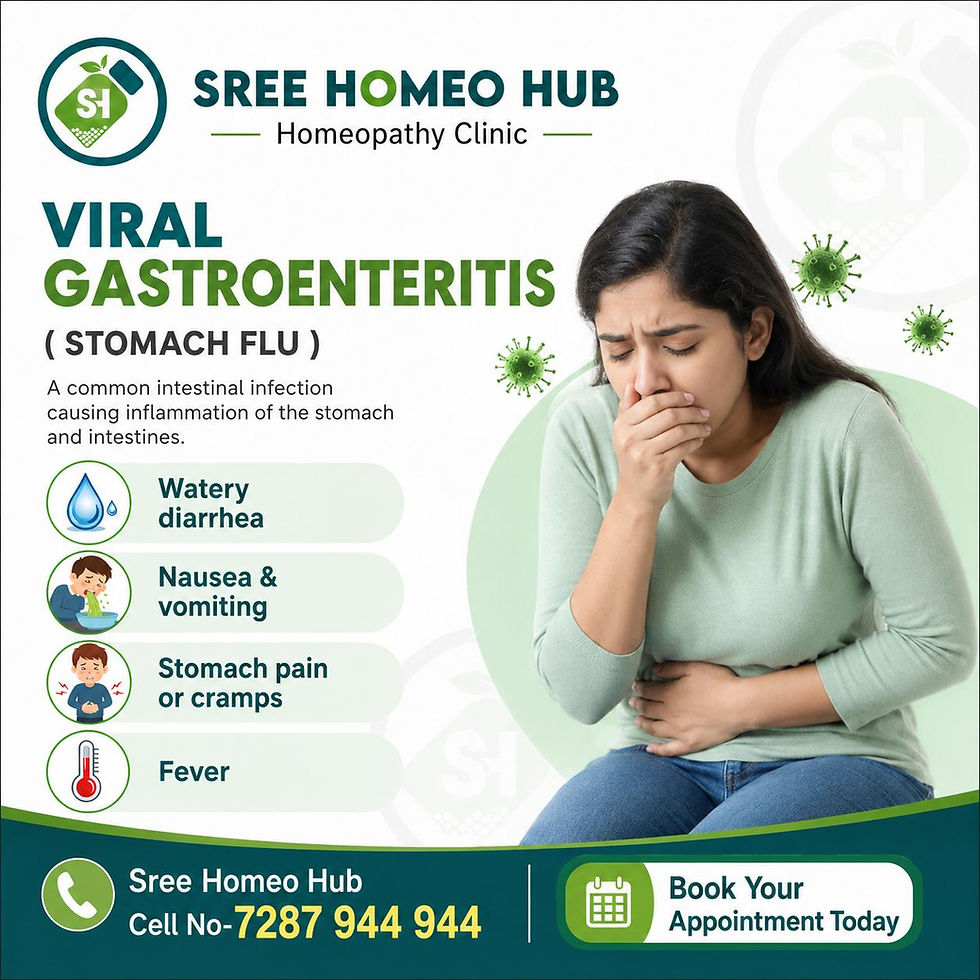
Viral gastroenteritis, commonly called the stomach flu, is an infection of the digestive system that can cause diarrhea, vomiting, nausea, stomach cramps and sometimes fever. Despite the name “stomach flu,” it is not caused by influenza viruses. Viral gastroenteritis is usually caused by viruses that affect the gastrointestinal tract.
Most healthy people recover without specific medical treatment. The most important part of care is replacing fluids and electrolytes lost through vomiting and diarrhea and watching carefully for signs of dehydration.
At Sree Homeo Hub, Hyderabad, patients can receive individualized medical consultation for digestive symptoms, including guidance regarding hydration, diet, symptom monitoring and when further medical evaluation may be necessary.
What Is Viral Gastroenteritis?
Viral gastroenteritis is inflammation of the stomach and intestines caused by a viral infection. It can spread easily from person to person and through contaminated food, water, surfaces or close contact with an infected person.
Common viruses associated with gastroenteritis include norovirus and rotavirus. The illness can affect children and adults, and dehydration is one of the main complications to watch for.
The term “stomach flu” is misleading because viral gastroenteritis is different from influenza, which primarily affects the respiratory system.
Common Symptoms of Viral Gastroenteritis
Symptoms can vary from mild to severe. Common symptoms include:
Watery diarrhea
Nausea
Vomiting
Stomach cramps
Abdominal discomfort
Mild fever
Headache
Body aches
Weakness and tiredness
Reduced appetite
Increased thirst
Signs of dehydration
Vomiting and diarrhea together can cause substantial fluid and electrolyte loss, particularly in young children, older adults and people with certain underlying health conditions.
Causes of Viral Gastroenteritis
Viral gastroenteritis may occur after exposure to infectious viruses through:
Close contact with an infected person
Contaminated food
Contaminated drinking water
Poor hand hygiene
Touching contaminated surfaces and then touching the mouth
Improper food preparation
Sharing utensils or food with an infected person
Because some viruses causing gastroenteritis are highly contagious, good hygiene is important for preventing transmission.
How Does Stomach Flu Spread?
A person with viral gastroenteritis can spread infection through tiny amounts of stool or vomit contaminating hands, food, water or surfaces.
To reduce transmission:
Wash hands thoroughly with soap and water.
Wash hands after using the toilet.
Wash hands before preparing or eating food.
Avoid preparing food for other people while sick.
Clean contaminated surfaces appropriately.
Wash contaminated clothing and bedding carefully.
Avoid sharing food, utensils and personal items.
Wash fruits and vegetables before eating or preparing them.
Follow safe food preparation practices.
People with viral gastroenteritis should avoid preparing food for others while they are sick and for two days after symptoms stop, according to NIDDK guidance.
Viral Gastroenteritis and Dehydration
Dehydration is one of the most important complications of vomiting and diarrhea.
Watch for:
Excessive thirst
Dry mouth
Reduced urination
Dark-colored urine
Weakness
Dizziness or light-headedness
Unusual tiredness
In children, fewer wet diapers or reduced activity
Replacing lost fluids and electrolytes is a central part of managing viral gastroenteritis. Small, frequent sips may be easier to tolerate when vomiting is present. Oral rehydration solutions can be useful for replacing water and electrolytes.
What to Eat During Viral Gastroenteritis?
You do not usually need to completely stop eating or follow an extremely restrictive diet.
When your appetite returns, you can generally gradually return to your usual diet. NIDDK notes that restricted diets have not been shown to treat viral gastroenteritis.
Choose foods that you personally tolerate well and consider smaller meals if your stomach is sensitive.
Foods and Drinks That May Be Easier to Tolerate
Depending on your symptoms, you may consider:
Rice
Khichdi
Plain toast
Crackers
Bananas
Plain potatoes
Light soups or broths
Plain foods in small portions
Adequate fluids
Oral rehydration solution when appropriate
The goal is not to follow a rigid “stomach flu diet,” but to maintain hydration and gradually return to normal nutrition as appetite improves.
Foods to Limit or Avoid During Diarrhea
Some foods and drinks may worsen diarrhea or digestive discomfort in certain people.
Temporarily limit:
Fried foods
Very oily foods
Fast food
Very spicy foods
Alcohol
Excess caffeine
Very sugary drinks
Large quantities of fruit juice
Heavy meals
Milk and other dairy products may temporarily cause problems for some people after gastroenteritis because lactose can be harder to digest during recovery.
Food Precautions During Recovery
Follow these precautions:
Drink safe, clean water.
Wash hands before eating.
Avoid raw or inadequately cooked foods.
Wash fruits and vegetables thoroughly.
Avoid street food when hygiene is uncertain.
Do not share utensils with someone who is sick.
Keep kitchen surfaces clean.
Avoid preparing food for others while you are infectious.
Store cooked food safely.
Continue adequate fluid intake even when diarrhea improves.
Viral Gastroenteritis Treatment
For most uncomplicated cases, treatment focuses on supportive care rather than eliminating the virus with a specific medicine.
Important measures include:
1. Hydration
Replace fluids and electrolytes lost through vomiting and diarrhea. If vomiting makes drinking difficult, take small amounts frequently rather than drinking a large quantity at once.
2. Rest
Adequate rest can help you manage weakness and fatigue while your body recovers.
3. Gradual Return to Food
Once appetite returns, gradually resume normal food according to your tolerance. Prolonged fasting or highly restrictive diets are generally not recommended for viral gastroenteritis.
4. Medical Assessment When Necessary
Severe dehydration, persistent vomiting, bloody diarrhea, significant abdominal pain, high fever, or symptoms that are not improving require medical assessment.
Antibiotics do not treat viral gastroenteritis because antibiotics do not work against viruses.
Homeopathy for Viral Gastroenteritis
At Sree Homeo Hub, homeopathic consultation may be offered as an individualized complementary approach based on a patient's symptoms and overall presentation.
However, patients should understand that there is currently limited scientific evidence supporting homeopathy as an effective treatment for a specific medical condition. Homeopathic treatment should not replace medically necessary rehydration, diagnostic evaluation or emergency treatment.
For vomiting and diarrhea, the priority remains preventing dehydration and identifying patients who require conventional medical care.
A consultation can help assess symptoms, duration, hydration status, dietary tolerance and whether additional medical evaluation is appropriate.
When Should You Consult a Doctor?
Seek prompt medical attention if you experience:
Severe or increasing abdominal pain
Blood in the stool
Blood in vomit
Persistent vomiting
Inability to keep fluids down
Signs of significant dehydration
Very little or no urine
Severe dizziness or weakness
High or persistent fever
Severe diarrhea
Symptoms that are getting worse rather than improving
Concerning symptoms in an infant, elderly person or medically vulnerable patient
People at greater risk of dehydration may require earlier medical assessment. Severe dehydration may require treatment in a healthcare facility.
Viral Gastroenteritis in Children
Children can become dehydrated more quickly than adults.
Parents should pay attention to:
Reduced urination
Dry mouth
Excessive thirst
Lack of tears when crying
Unusual sleepiness
Persistent vomiting
Frequent diarrhea
Blood in stool
Difficulty drinking fluids
Infants and young children with significant vomiting or diarrhea should be assessed by a healthcare professional when there are concerns about dehydration or severity.
Infants should generally continue breast milk or formula as advised by their healthcare professional rather than being placed on an unnecessary restrictive diet.
Frequently Asked Questions About
Viral Gastroenteritis
1. Is stomach flu the same as influenza?
No. Stomach flu is a common name for viral gastroenteritis. Influenza is a respiratory infection and does not cause viral gastroenteritis.
2. What are the most common symptoms of viral gastroenteritis?
The most common symptoms include diarrhea, vomiting, nausea, abdominal cramps and sometimes fever.
3. How can I prevent dehydration during stomach flu?
Drink fluids regularly and replace electrolytes. If vomiting is present, try small frequent sips. Oral rehydration solutions can help replace lost water and electrolytes.
4. Should I stop eating when I have diarrhea?
Usually, prolonged fasting is not necessary. Once your appetite returns, gradually resume your normal diet as tolerated.
5. Can I drink milk during gastroenteritis?
Some people temporarily have difficulty digesting lactose after gastroenteritis. If milk worsens bloating or diarrhea, it may be helpful to limit it temporarily and discuss persistent symptoms with a doctor.
6. Can spicy food worsen diarrhea?
Spicy or oily foods may aggravate digestive symptoms in some people. It is reasonable to choose simpler, less fatty foods until your stomach settles.
7. Can viral gastroenteritis be treated with antibiotics?
No. Antibiotics do not treat viral infections. A healthcare professional should determine whether another cause of diarrhea requires specific treatment.
8. Is homeopathy scientifically proven to cure viral gastroenteritis?
There is limited evidence supporting homeopathy as an effective treatment for specific medical conditions. It should not replace hydration, appropriate medical evaluation or emergency care when required.
9. Can I have an online consultation for stomach flu symptoms?
Yes. Sree Homeo Hub offers online consultations, where symptoms can be discussed and guidance can be provided regarding hydration, diet, precautions and whether an in-person medical assessment is needed.
10. When is diarrhea an emergency?
Diarrhea requires urgent medical attention when accompanied by significant dehydration, blood in the stool, severe abdominal pain, persistent vomiting, inability to drink, severe weakness or other serious symptoms.
11. What should I drink during viral gastroenteritis?
Water and fluids containing electrolytes can help replace losses. Oral rehydration solutions are particularly useful when there is substantial fluid loss.
12. Can I return to my normal diet after feeling better?
Yes. As appetite returns and symptoms improve, most people can gradually return to their normal diet.
Viral Gastroenteritis Prevention Tips
Prevention is especially important because viral gastroenteritis can spread easily.
Remember:
Clean hands → Safe food → Safe water → Clean surfaces → Avoid spreading infection
Wash your hands thoroughly with soap and water, especially after using the bathroom and before preparing or eating food.
Homeopathy Consultation for Digestive Health in Hyderabad
Sree Homeo Hub provides homeopathic consultations for patients in Nallagandla, Chandanagar and surrounding areas of Hyderabad.
Our consultations focus on understanding the patient's symptoms and providing individualized guidance. Patients with vomiting, diarrhea or suspected gastroenteritis should first be assessed for dehydration and other warning signs.
We also provide online consultation options for patients who cannot visit the clinic in person.
Why Choose Sree Homeo Hub?
Experienced doctors with 10+ years of clinical experience
Individualized patient consultation
Digestive health and gastrointestinal symptom consultation
Online consultation available
Convenient consultation options
Serving patients in India and internationally
Book a Consultation
📍 Nallagandla & Chandanagar, Hyderabad
📞 Call / WhatsApp: 7287 944 944
💻 Online Consultation Available
🌐 Website: www.sreehomeohub.net
Serving Patients From
🇮🇳 India | 🇺🇸 USA | 🇨🇦 Canada | 🇬🇧 UK | 🇦🇺 Australia | 🇩🇪 Germany | 🇫🇷 France | 🇳🇱 Netherlands | 🇧🇪 Belgium | 🇨🇭 Switzerland | 🇦🇹 Austria | 🇸🇪 Sweden | 🇳🇴 Norway | 🇩🇰 Denmark | 🇫🇮 Finland | 🇮🇪 Ireland | 🇮🇹 Italy | 🇪🇸 Spain | 🇵🇹 Portugal | 🇵🇱 Poland | 🇳🇿 New Zealand | 🇸🇬 Singapore | 🇲🇾 Malaysia | 🇦🇪 UAE | 🇸🇦 Saudi Arabia | 🇶🇦 Qatar | 🇰🇼 Kuwait | 🇴🇲 Oman | 🇧🇭 Bahrain | 🇿🇦 South Africa


Comments